

10 Immersive Experience Examples That Get Guests Talking (And Spending)

May 13
2 min read
Immersive design gets praised in adjectives — "magical," "next-level," "unforgettable" — that don't actually tell you anything. What separates a genuinely immersive experience from a themed backdrop is specific, repeatable design decisions. Here are ten examples worth studying, and what's actually driving each one.
1. Story-first layout. The best attractions don't bolt a narrative onto a floor plan — the floor plan is the narrative, with sightlines and reveals sequenced like a script.

2. Sensory layering. Sound, scent and texture doing as much work as the visuals. A space that only looks immersive but sounds generic breaks the spell within seconds.

3. IP fidelity at guest eye-level. The detail that matters isn't the hero moment — it's what a seven-year-old sees when they're standing still, at their own height, waiting in a queue.

4. Earned transitions. Moving between zones should feel like part of the story, not a corridor. Our work on the Gladiators Experience with Live Nation and MGM leaned heavily on this — the arrival sequence does real narrative work before guests reach the arena.

5. Secondary spend built into the story, not bolted on. Retail and F&B that sit inside the narrative (a shop that's staged as "in-world") consistently outperform ones that feel like an exit funnel.
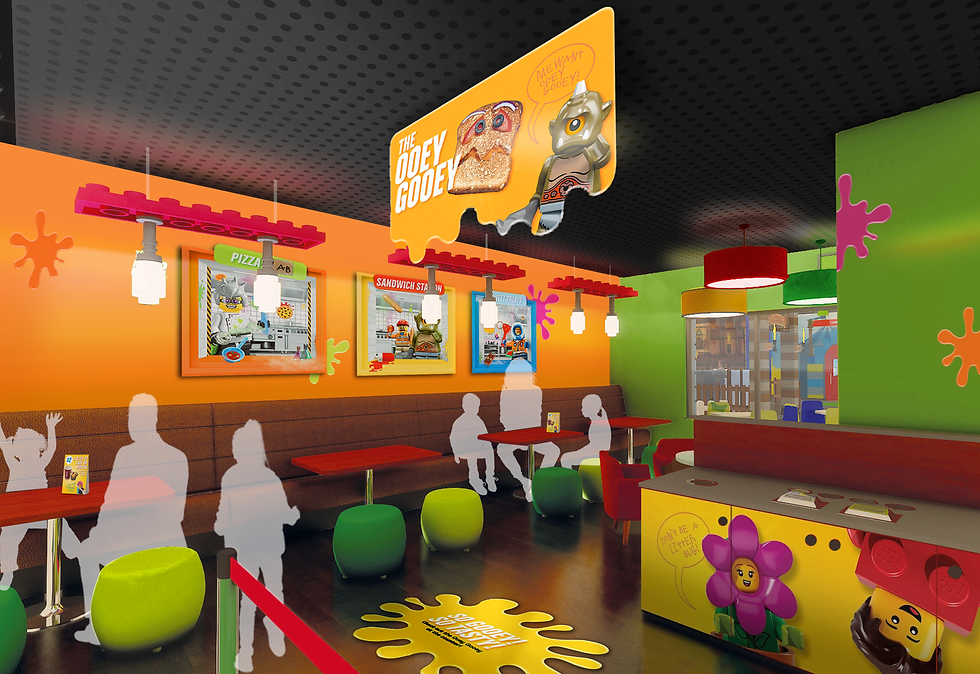
6. Flexible modularity for brand licensors. Multi-site rollouts — like our ongoing work with The LEGO® Group across 30+ locations — need designs that flex for different site footprints without losing brand integrity.

7. Micro-moments of surprise. Small, unscripted-feeling details (a reactive prop, a hidden detail) create the word-of-mouth moments that outperform any hero attraction on social reach.

8. Inclusive sensory design. Quiet zones, adjustable stimulation levels, and clear sightlines for neurodivergent guests and those with physical disabilities aren't an add-on — they're now core to guest experience audits.

9. Operational choreography. Immersion breaks the moment staff have to step out of character to manage a queue or a fault. The best experiences are designed with operations, not handed to them afterward.

10. A measurable emotional arc. This is where most legacy approaches fall down — see our piece on why traditional NPS falls short for how we track guest emotion across a visit rather than relying on a single post-visit score.

What ties all ten together is that immersion is engineered, not decorated. It comes from the same Insights → Design → Creative Production process regardless of scale — whether that's a single brand activation or a multi-acre theme park land.
If you're scoping a new immersive experience and want to see how these principles apply to your site or IP, our Design services page is the place to start.


Comments