

When designing attractions for younger children remember this golden rule…


Kids are not small adults. It would be easy to make the mistake that designing for children is all about reducing the scale and size of adult concepts, but that just won’t work for our mini fans at all!
The behaviour, communication, physical and cognitive skills in children are all different to us adults. They are living a waking dream, as up to around 6 years old, children's brains mostly operate in the theta brainwave state - associated with dreaming, meditation and imagination in adults.
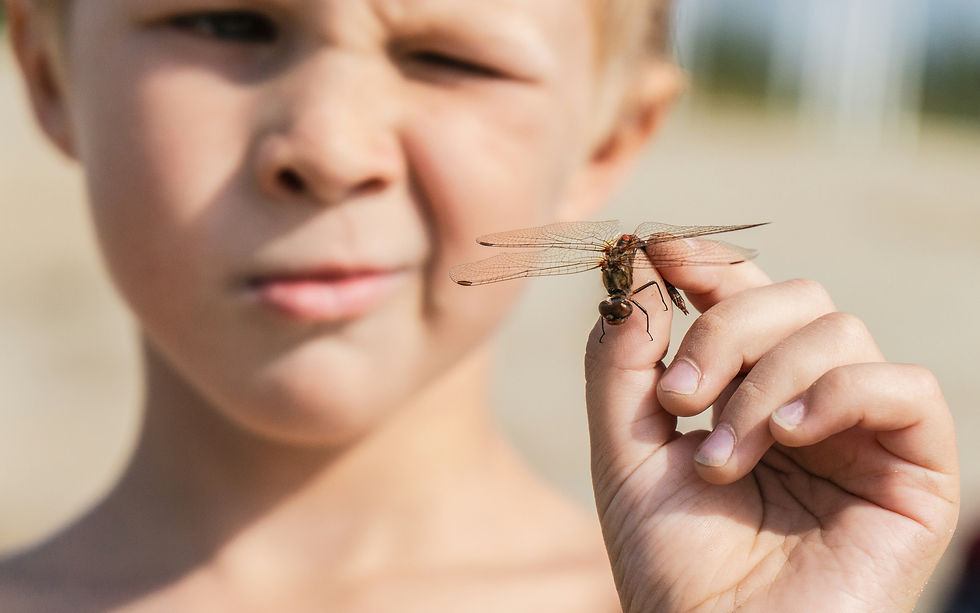
They are constant explorers, intensely curious and as yet, don’t have the social inhibitions of their grown up families. These differences make for brilliant creative opportunities.
Gigantosaurus Land
When we developed concepts for Gigantosaurus Land at the No.1 dinosaur adventure park in the UK, Roarr!, it was the ultimate invitation to design a theme park world focused on small children.
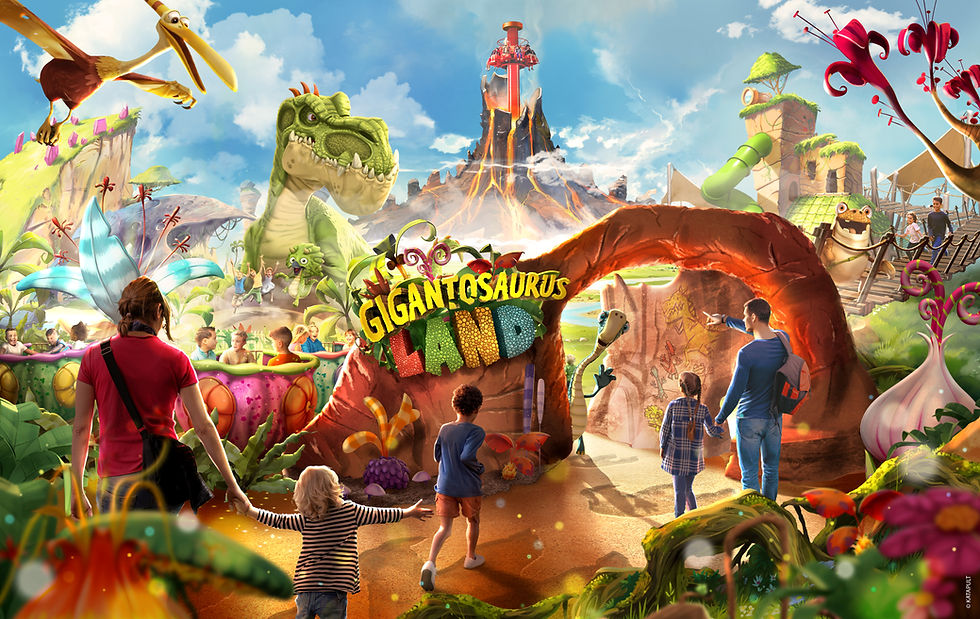
Designing from scratch, including landscaping and the attractions mix, meant we could design with the creative principle that ‘everything is playable’. It not only helped our guests play their way around the theme park, it also meant they were safe to explore anywhere because where we didn’t want them to go was purposefully designed out of their guest flow.
After we layered that foundational design ethos into the project we went on to consider the way kids play, for this we use the work of Dr Stuart Brown and his play personalities. We matched these play personalities not just to the attractions and interactives but to the IP characters themselves.
From digital to physical
Gigantosaurus is essentially a buddy show about a fun group of dinosaur friends, so we could easily align our play psychology with each character. This helped us make a rich guest experience, immersed in the IP world, for every child no matter how they liked to play and learn.

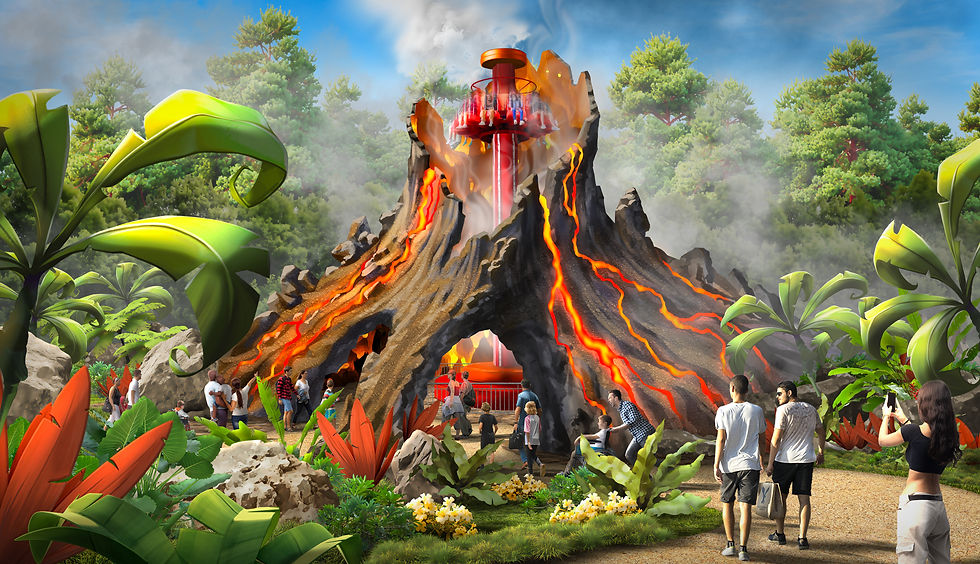
One of our biggest challenges was, at the time of design, the IP had not been given life in an attraction - there were no world rules. We needed to consider how big the characters were in relation to our guests and especially Gigantosaurus himself. Would any 4 year old want to see a 7 metre tall dinosaur roaring at them?
Probably not.
So, we cleverly adapted his presence into a trail, with footprints and glimpse, and a final nose sneezing moment. We turned a potential scary dino into a fun-loving character through thoughtful design.
Child-first mentality

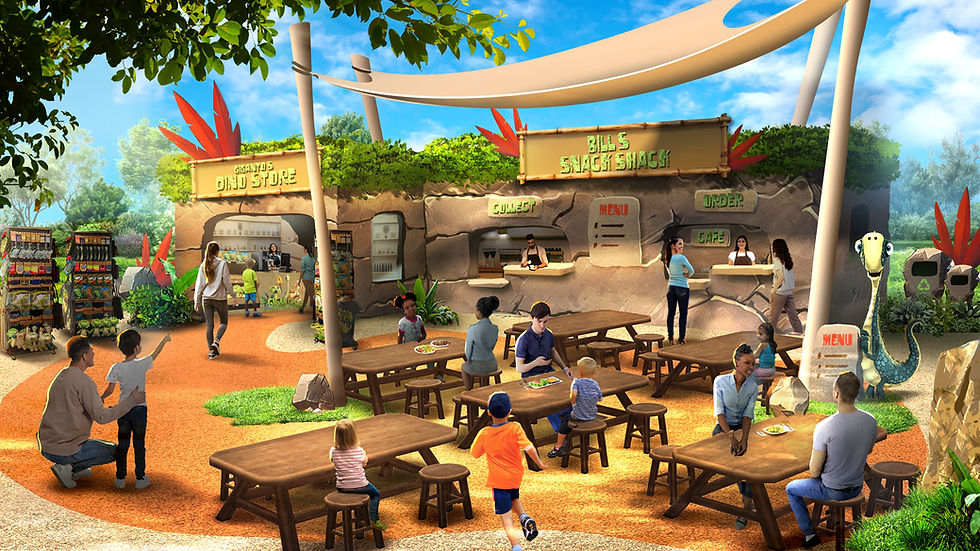
Our playscapes were vital to the project too, young children need to run off steam and at this age a climbing frame can be as much fun as a ride. We capitalised on that and made play corridors between rides and attractions, encouraging families to find their own fun within our world. The F&B offering, the live entertainment zones, the toilets and access, all of this was thought through from a very specific child-first mentality.
It absolutely pays off to embrace the opportunities of child-first design. Not only does it make the attraction commercially viable and insanely marketable, it also delivers a fantastic guest experience. We’re always excited to design for our smallest guests at Katapult, so talk to us for more insights and ideas for family attractions.



Comments